
He and She, and the Lobster on the Pi
Once upon a time, in the Kingdom of Academia…
There lived an ESL teacher named Cindy. But since her mom passed away, no one has called her Cindy anymore.
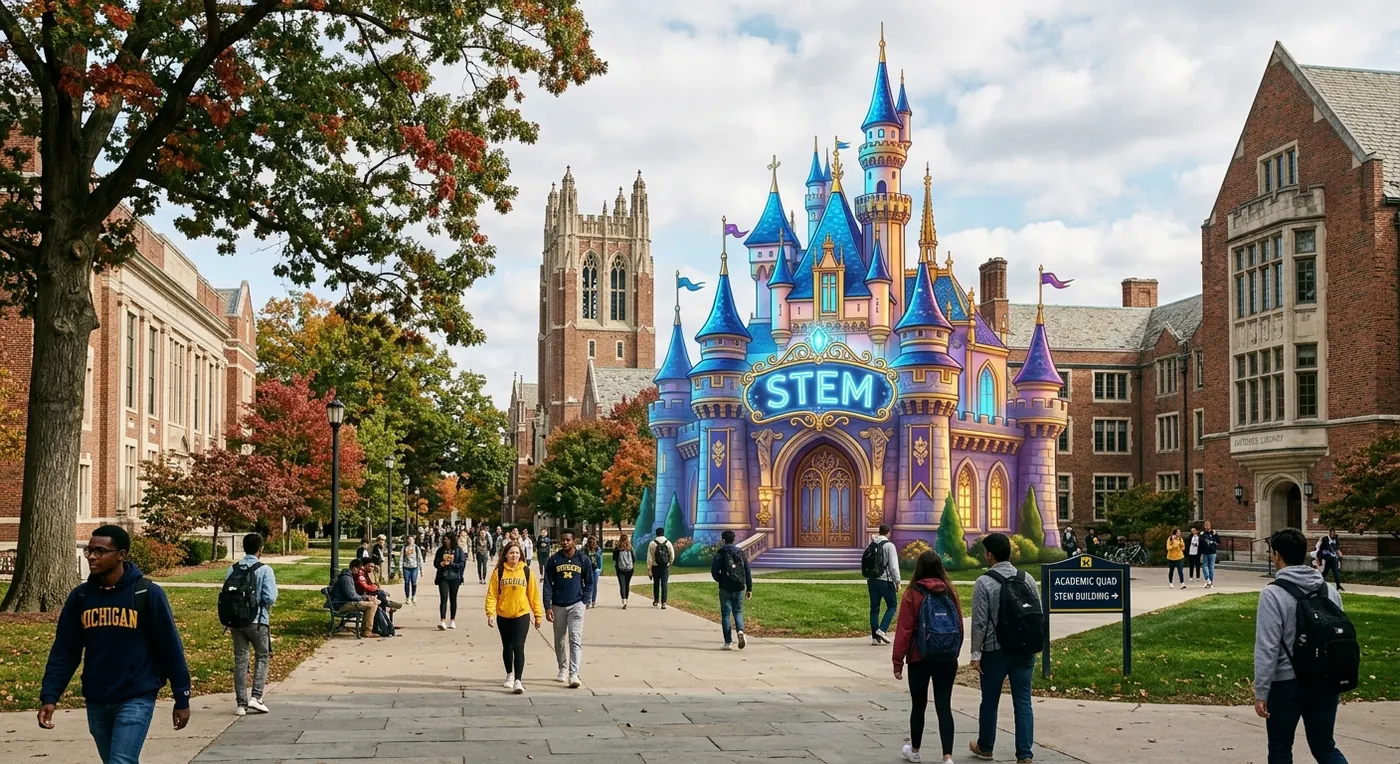
Everyone called her Ella thanks to her wicked twin stepsisters, Ziri and Olexa, in the STEM Department. They loved mocking Cindy and one of her students, Miguel, who also worked as a night janitor. The sisters would see them passing in the hallway and sneer: "Look, it's Él and Ella. He and She. What a pair of nobodies!" They knew that much Spanish, these smart girls.
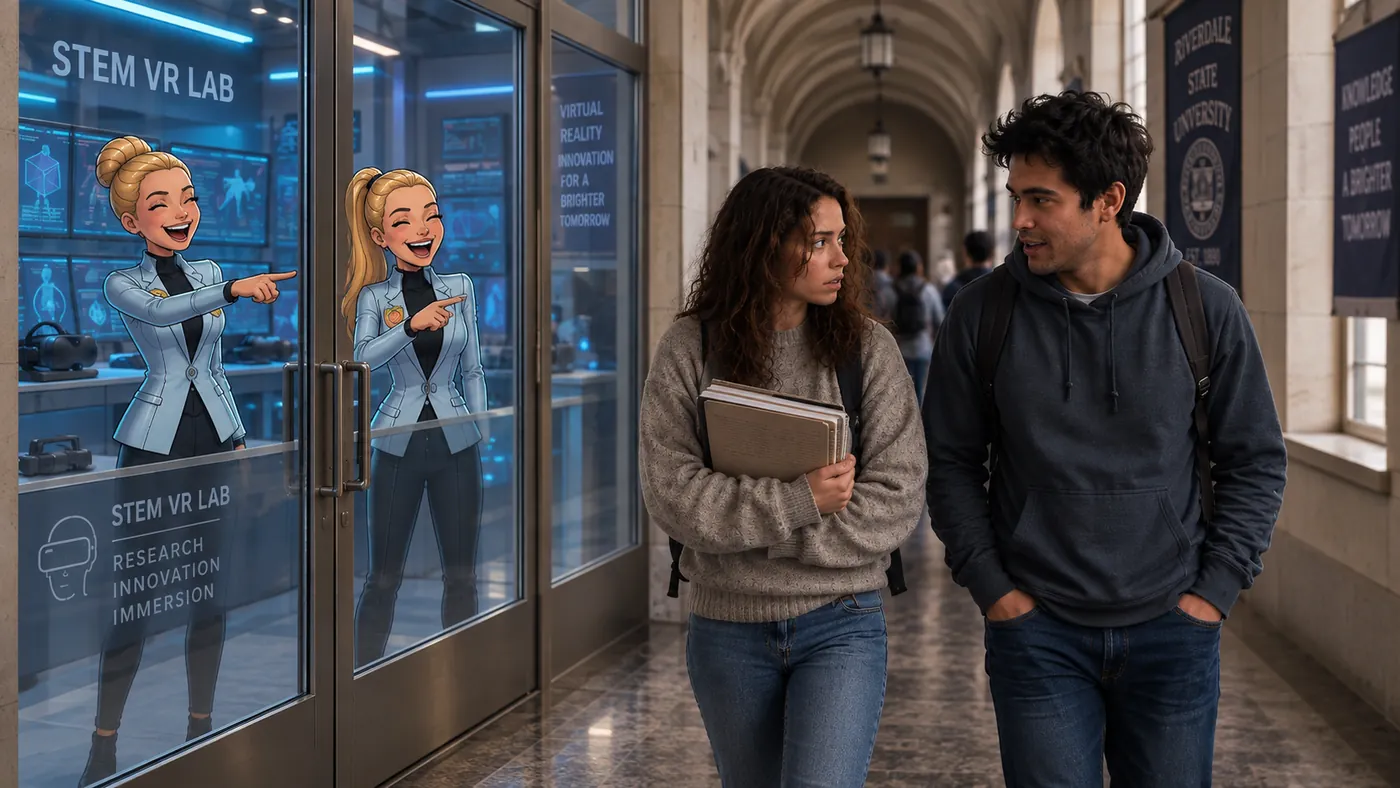
Miguel was a quiet young man. He had a degree in engineering from his home country, but his English pronunciation kept him pushing a mop instead of designing bridges.
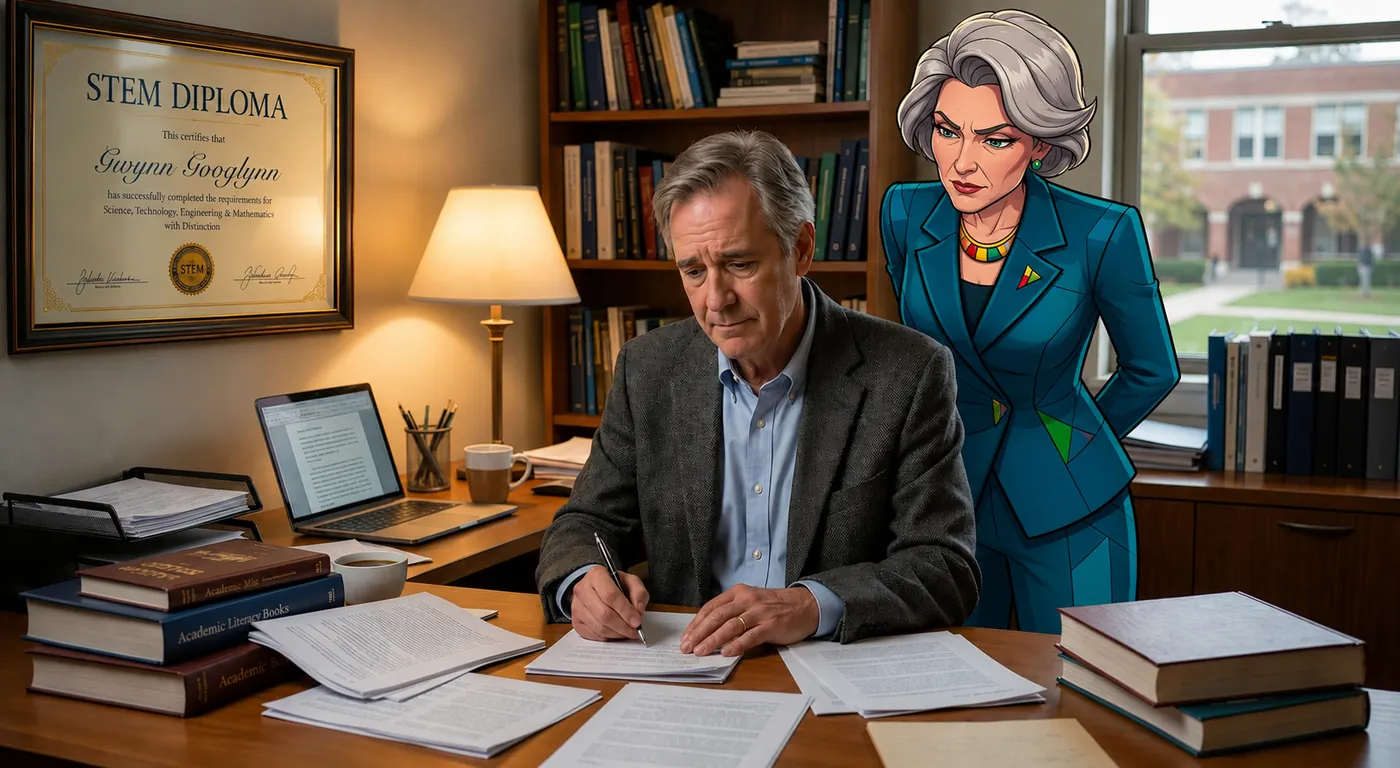
Ella's father, Linus, was the Chief Administrative Officer of the entire campus. Technically, he had the power to change things, but, a gentle, open-source kind of man, he was trapped in a proprietary marriage to Ziri and Olexa's mother, Dean Gwynn Googlynn.
Gwynn controlled the university's purse strings with an algorithm of such pure nepotism that poor Linus could do nothing but funnel the shiny grants into his stepdaughters' VR lab. All his Cindy got was a squeaky whiteboard marker and her mom's old laptop that ran phonetic analysis at the speed of continental drift.
The Frozen Spell
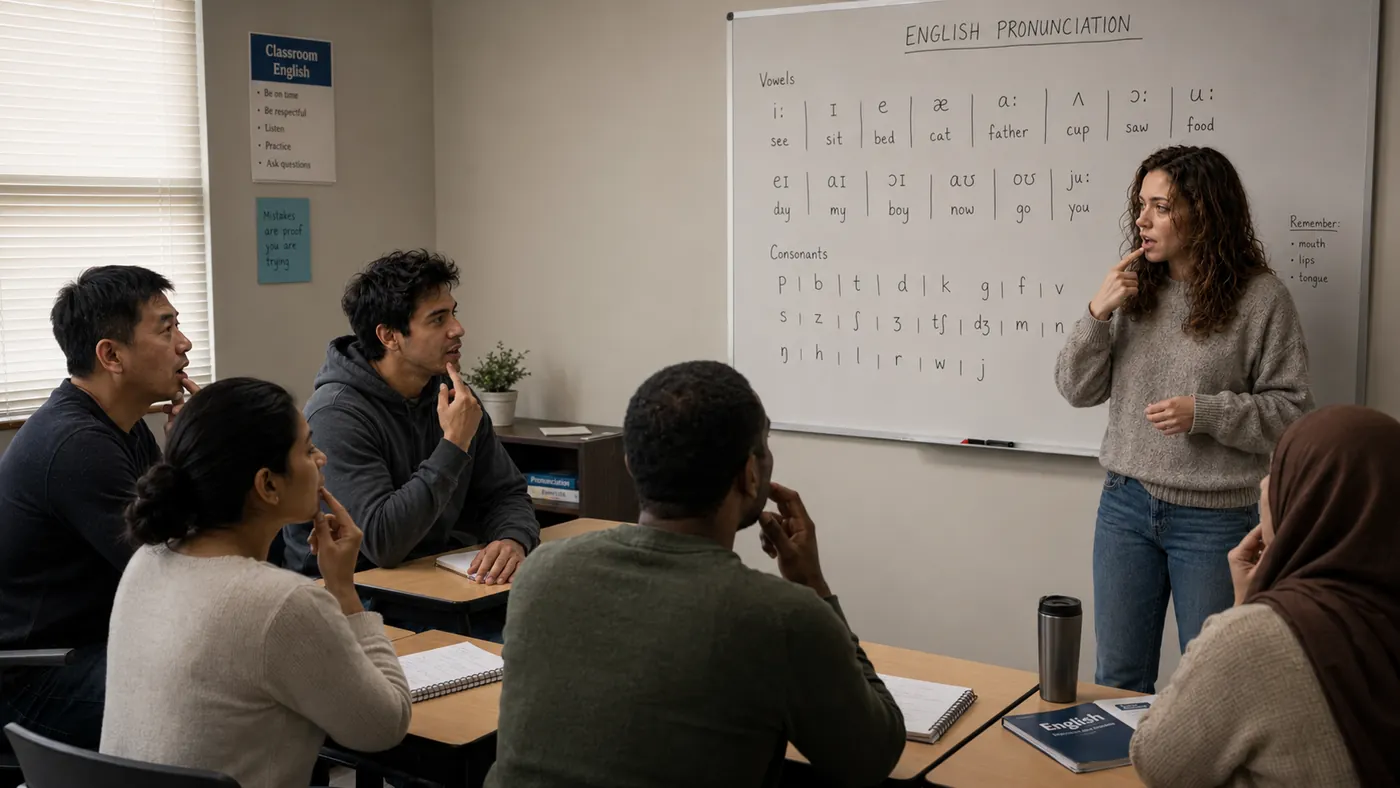
Every day, Ella listened to her students. They had the grammar of scholars and the vocabulary of poets, but their pronunciation was trapped in a thicket of L1 interference.
One evening, Ella had to stay in the adjunct office long after hours. Ziri and Olexa had dumped her in a ditch of data to label and organize into spreadsheets. "Girls' data should be pure, with no accent!" said Dean Googlynn and all three took off to a grant-funded gala, giggling like teenagers.

Ella's own work—a meticulous analysis of Miguel's latest recording—froze on the screen. The little pinwheel spun and spun. And spun. She had been trying to isolate the F2 transition of Miguel's /l/ sound. He was pronouncing "world" as "wor-ud". "If I could just show him the spectrogram drop-off, I know he would be able to fix it." But the laptop was drowning in the data. She thought of Miguel's face when he struggled to order coffee and of the thousands of students like him all over the world, who couldn't afford private tutors and accent coaches.
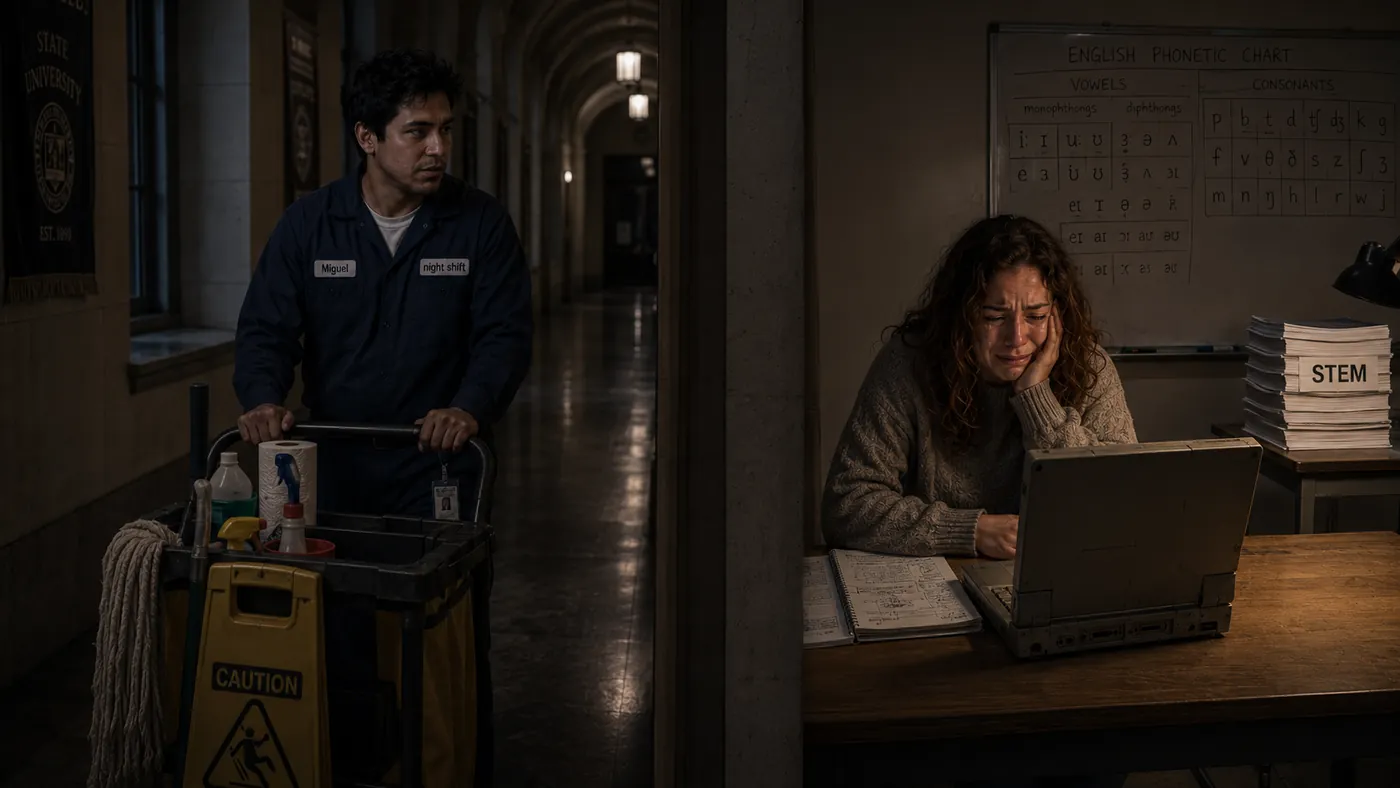
Exhausted and broken-hearted, Ella put her head on the non-responsive keyboard and wept.
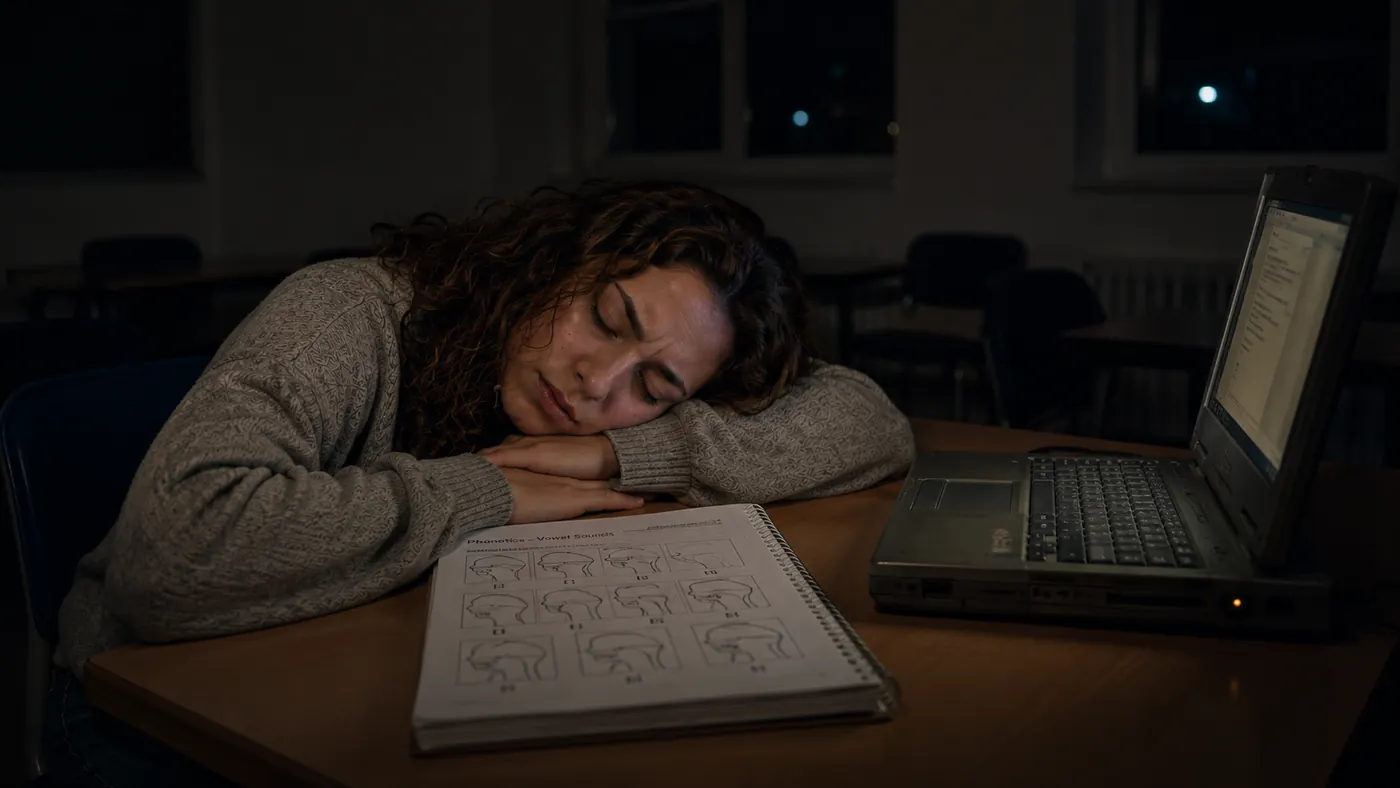
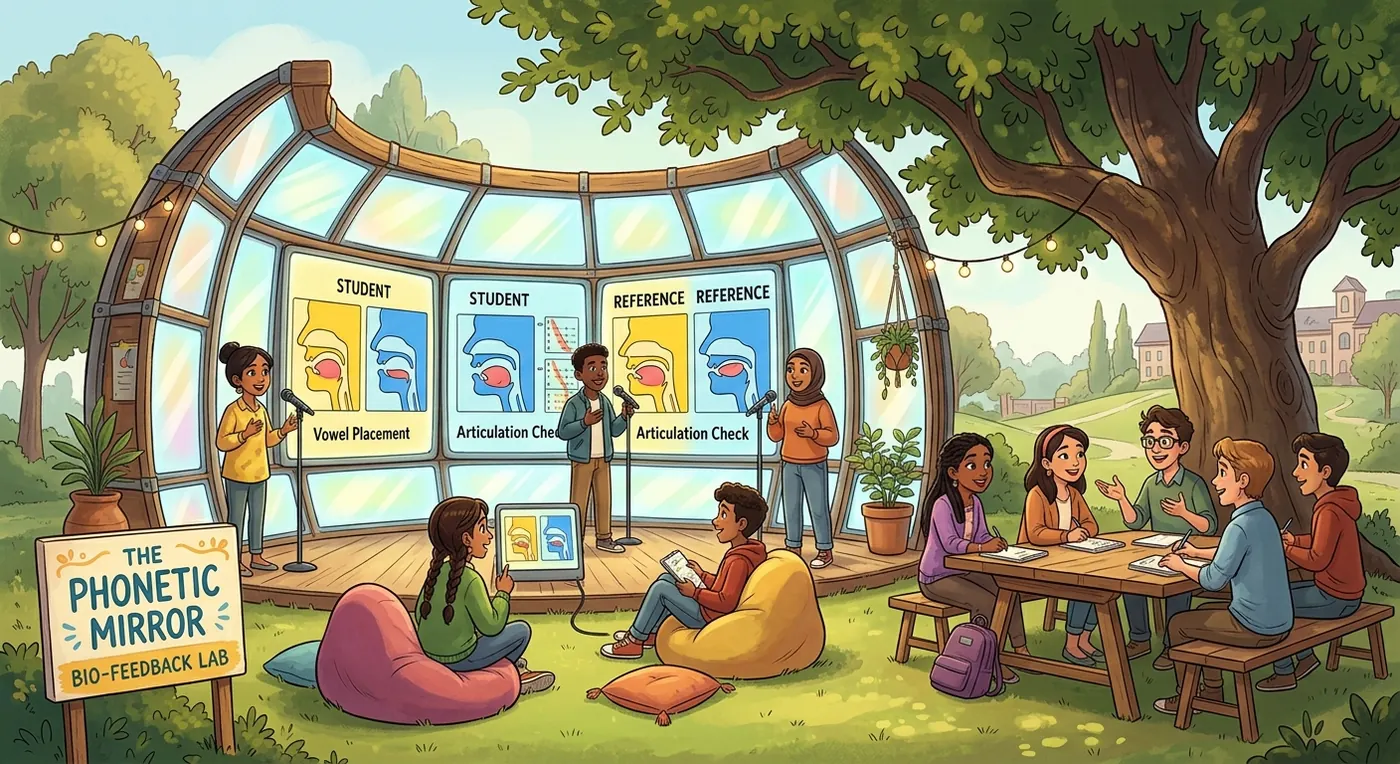
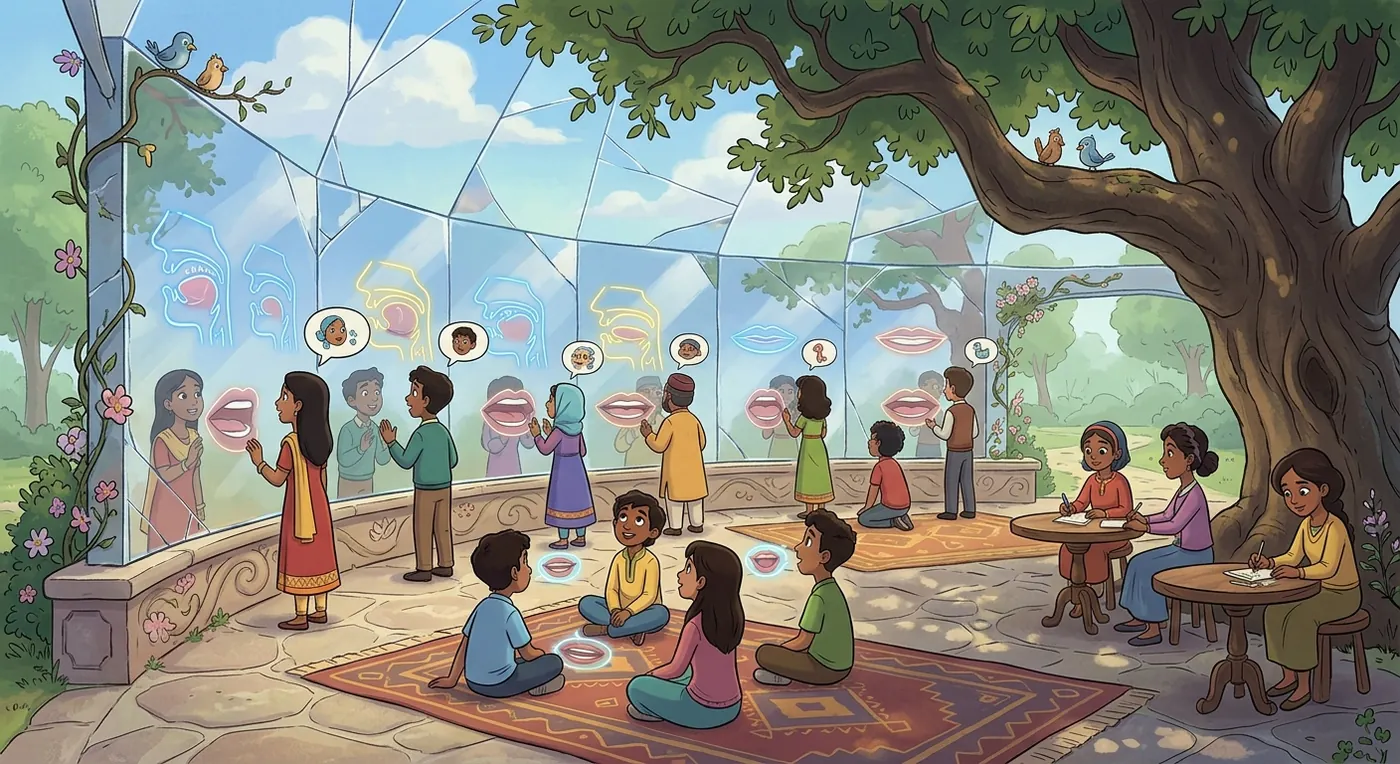
She fell asleep and dreamed of a biofeedback lab—Phonetic Mirror Castle—a place where the walls listened to you and drew a picture of your lips and tongue, and your pronunciation suddenly became visible at the very moment you spoke; where everyone's speech improved faster; where all the students felt safe; and that place was open to everyone, no matter the language.
The Wizard of Open Source
“I just want them to see the sounds they cannot hear. If only I had a carriage that could carry a load that heavy” she muttered in her sleep.
And then, as if from the fog of her childhood memories, a very distant relative appeared. He wasn't a godfather of fairy dust; he was the wizard of open source, a man who lived in a server farm in the decentralized Lower Lands where all code was free. He wore a boxy, slate-grey suit, a rigid menu-bar necktie, and a sweater vest knitted out of striking, chaotic bands of hot pink and electric yellow—the unmistakable colors of a wideband spectrogram. His thick, round spectacles looked like pitch-tracking nodes, and when he spoke, his voice didn't just hum; it resonated at a perfectly stable fundamental frequency of 100 Hertz, carrying a gentle Dutch accent. He had kind eyes and smelled faintly of soldering iron.
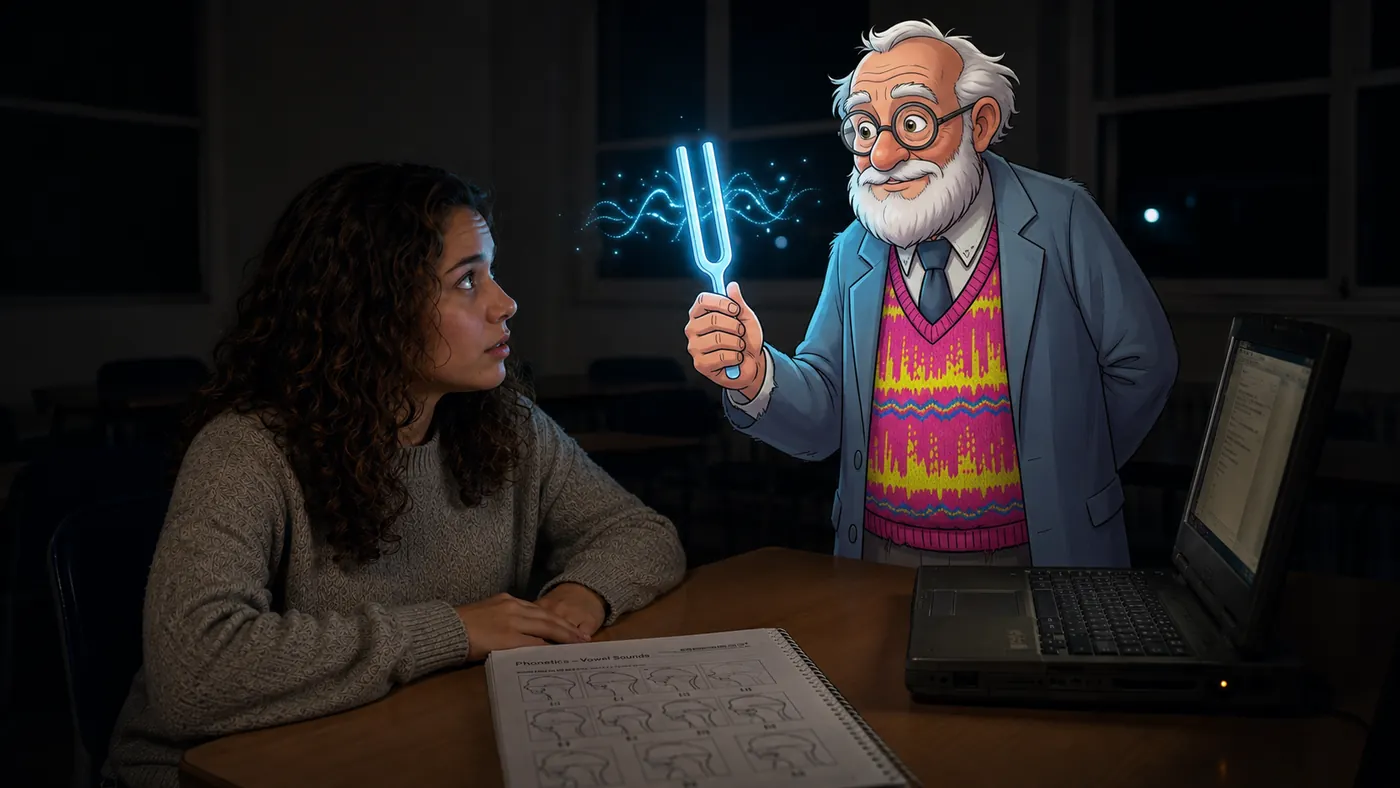
"Oh, I see why this machine I once made for my second cousin's daughter was pinging me. You're still running my analysis engine on this old horse, ben je niet? Poor thing," he said softly, gently touching the laptop with the frozen screen.
Ella sniffled in her dream. " Your engine?"
The old man smiled, his gray eyes twinkling behind his glasses. "Yes, child. I am Praat, the Keeper of Phonetic Algorithms. But as the saying goes, you cannot teach an old dog a new trick. You need a younger, swifter companion. I'll take care of the old one."
He reached into his pink-and-yellow vest and pulled out a spectral tuning fork. It turned luminous and blow a spark " Pi is in Harness and the Claw is Open, " he muttered as if to himself. And suddenly the fork turned luminous and blew a spark into the dark room.
Ella blinked and open her eyes, puzzled and slightly disoriented. "A claw in the pie?"
Miguel, finishing his shift, stood in the doorway, a question in his eyes. He came closer and stretch out his hand. "Look what I found," In his open palm sat a small token—a flat, metallic charm with a tiny red lobster etched onto its surface.
"A... lov-ESS-ter," his accent's thickening on the unfamiliar word.
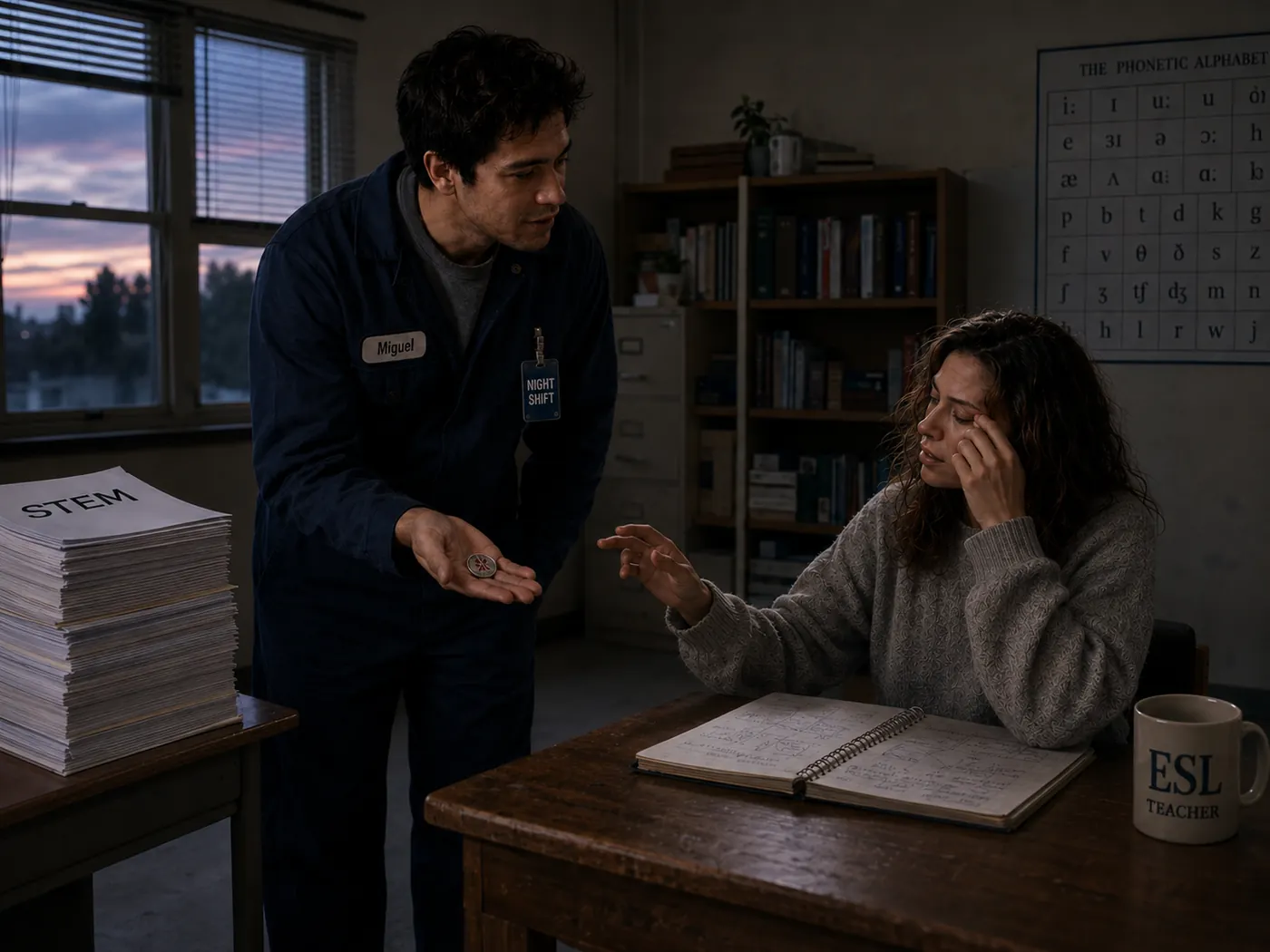
"A WHAT?" Ella blinked again, wiping her eyes. She reached out for the token.
The moment her fingers closed around it, the token vibrated. It grew warmer and heavier until it expanded with a soft click. And then it turned into a sleek box. A toy-like computer box sat solidly in her palm. She saw a little booklet with a lobster on the side. In neat, tiny letters it read: " OpenClaw on Pi harness, designed in Austria. Installation guide."
Miguel crossed himself. Ella just stared.
The Building of the Carriage
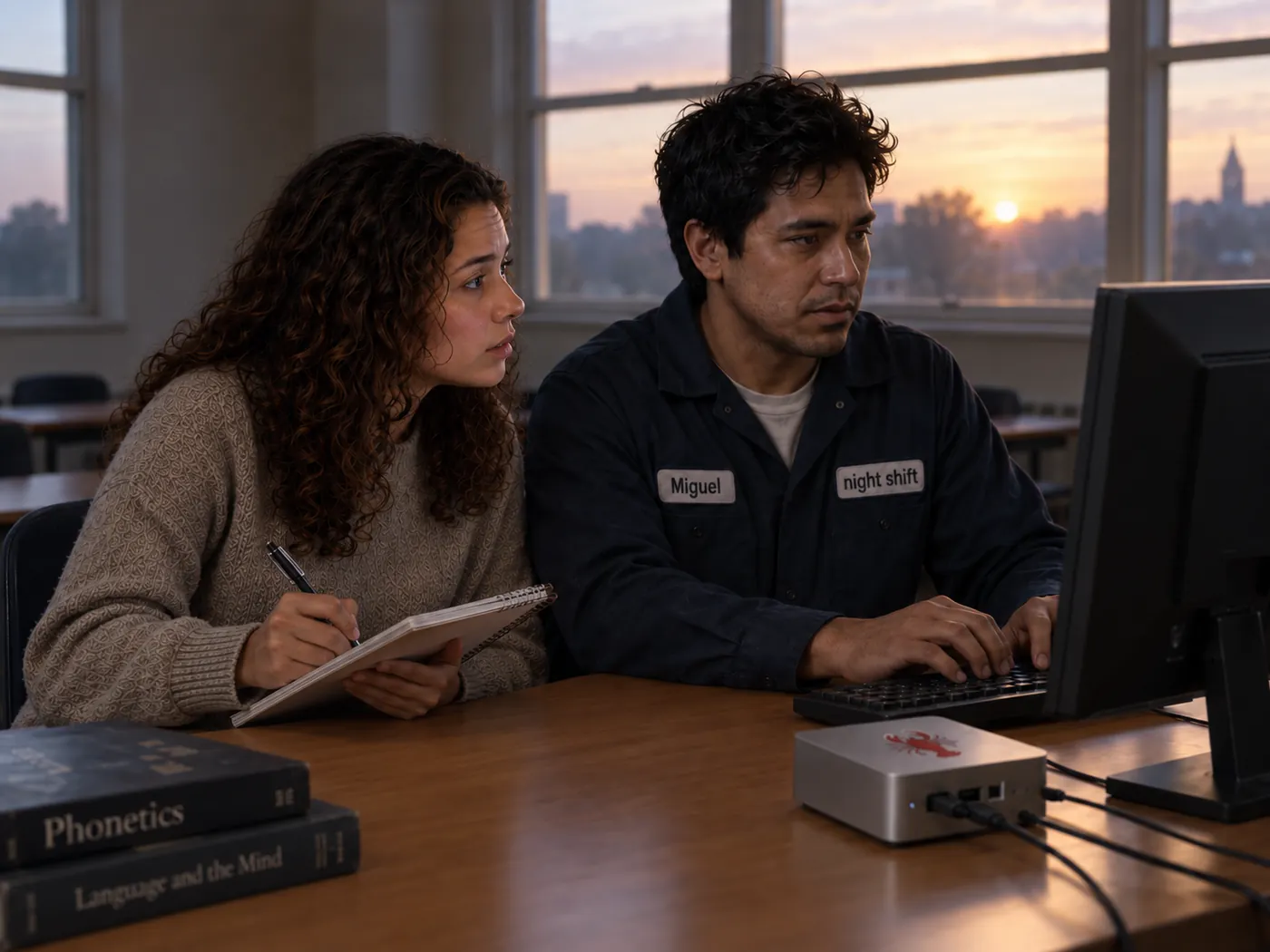
This is the part of the fairy tale that usually gets skipped with a wave of a wand. But here, in Ella's world, this was the magic. Miguel looked at the little box with a mixture of awe and professional curiosity. He took the tiny computer from her, plugged it into the dusty ethernet port in the wall and an old monitor, and sat at the scuffed desk with Ella.
Step 1: The Carriage Assembly
The computer blinked and hummed to life almost silently. "Great design," Miguel noted. Like a real engineer, he gave the little machine a clean, lightweight setup and kept only what they needed for sound analysis and scripting. No bloatware.
Ella's Journal: "Miguel says this makes the carriage lighter. It uses less RAM to think about windows and more to think about sound . He's impressed. He keeps muttering 'lov-ESS-ter' under his breath and shaking his head."
Step 2: Teaching Lobster to Listen
Miguel gathered the tools they needed. The screen flooded with lines of code.
- Praat checked
- Python checked
- FFmpeg checked
"We are at your service," Miguel finally said.
"So the Lobster is like a... a butler?" asked Ella.
"Sí," Miguel said. "It waits. When it sees a new file—your student's voice—it reads a skill file. The skill file says: 'Do this, then this, then this.' Like a recipe."
"And the recipe tells it to use Praat?"
"Exactamente."
Step 3: Ella Teaches Lobster About Vowels
Ella pulled out her battered notebook. It was filled with years of hand-drawn vowel charts and acoustic measurements scrawled in the margins of student assignments. She flipped to a clean page
"Okay," she said. "Here's what Lobster needs to know about vowels."
She drew a quick trapezoid—the vowel space.
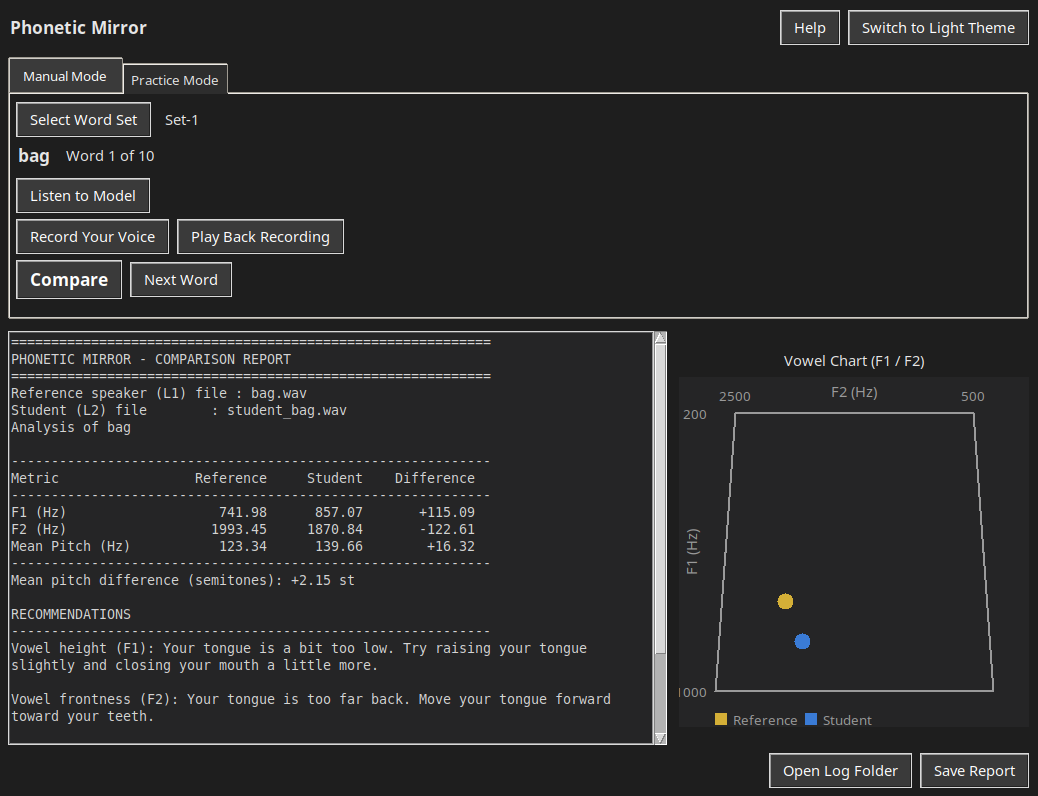
"Every vowel has a 'shape'. The shape is made by where I put my tongue. Praat can 'see' the shape by measuring two numbers. We call them F1 and F2."
She explained the Praat process in detail.
Miguel nodded slowly. "So you want Lobster to get these two numbers from the student's voice?"
"Correct. Then compare the two and tell the student how to adjust."
Miguel cracked his knuckles. "Okay. I can make Lobster do that."
Ella dictated from memory. She had done this manually a thousand times on her frozen laptop: Read file. Formant analysis. Burg algorithm. Get value at time. Extract F1. Extract F2.
Miguel translated her words into code. Ella read over his shoulder. "This is it? This tiny thing does what took me twenty minutes of clicking?"
"Sí. Lobster runs it in a second. And then it reads the results—like opening a tiny scroll that just says: 543, 1621."
"And then the Lobster knows my tongue was too high and too far back," Ella whispered.
Step 4: Ella Gives Lobster a Music Lesson
Ella turned to a new page in her notebook.
"One more thing. It's not just the tongue. It's the 'music'."
She drew a wavy line rising at the end.
"When Miguel asks a question in English, his voice should go up at the end. But he doesn't. He stays flat. Not because he can't—because he's spent years trying not to be noticed."
Miguel looked at the floor. He knew she was right.
"So I need the Lobster to measure the mean pitch—the average musical note of the voice. Praat calls it F0. The fundamental frequency. Praat can trace it over time. I don't want one voice to imitate another person's absolute pitch. I want the Lobster to show the contour: where the voice rises, where it falls, and how the melody changes."
Miguel nodded and added another part to the recipe.
"So the result now has two lines. First line: F1 and F2 from the vowel script. Second line: the mean pitch from the melody script. And the Lobster reads both."
Ella stared at the screen. "So the Lobster will know the 'shape' of the mouth AND the 'song' of the voice. From one recording?"
"Sí. A complete portrait."
Step 5: The Glass Slipper
Ella insisted on one final piece. "We can't just throw all this away after every lesson. We need to see progress. Every Miguel. Every vowel. Every rise and fall of every voice. I want to watch all of you getting better over time."
Miguel nodded. "Got it! A database. Like a journal that remembers forever."
He set up a simple progress log so each session could be saved and viewed later.
"Now," Miguel said, pointing at the screen, "you can look back at 'Miguel in October' and 'Miguel in April' and see how the picture changes."
Ella's Journal, final entry of the night: "I told Miguel what to measure. He taught the Lobster how to measure it. The carriage is built. Two spells live inside it now: one for the ghost of the tongue, one for the song of the soul. And Miguel—my Miguel—looked at the progress view and said, 'This is where I will watch myself become loud.' Tomorrow, we test it on a real voice."
That was their Glass Slipper. Not a shoe that fits a foot, but a tool that fits a voice—and two people who each knew exactly why the other needed to build it.
The small box beeped softly. A little lobster emoji appeared on the screen:
It was alive.
The Clock Strikes Midnight
Weeks passed. Ella's students stopped dreading pronunciation practice. They started bringing their own examples to feed into the machine. "What does my 'cat' look like today?" they'd ask, huddled around the screen, looking in the screen.
Miguel, the test pilot, saw his own formant plot of the word "engineer" overlap perfectly with the target for the first time. That afternoon, he walked into a job interview with a structural engineering firm and got the job. He didn't need the mop anymore.
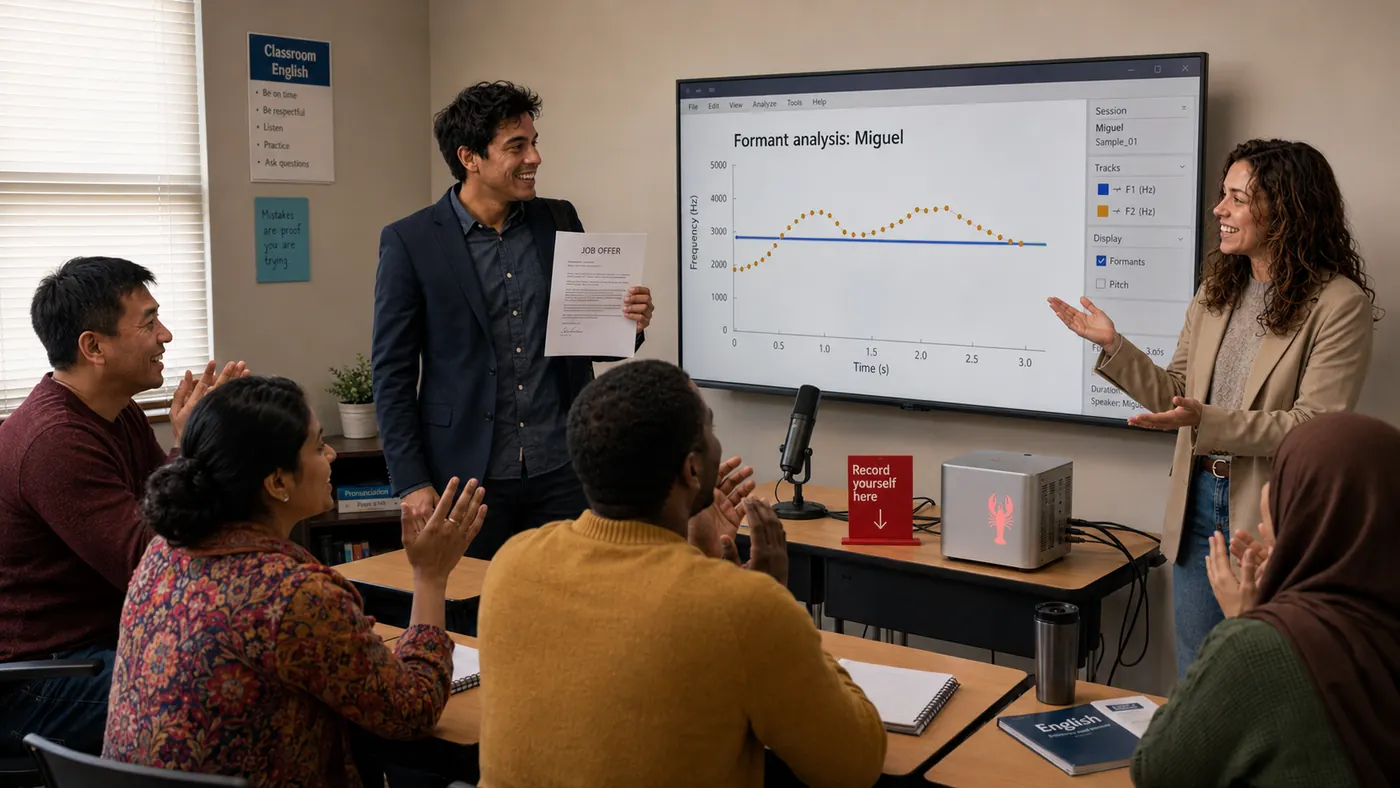
The success was so loud it echoed down the stairs all the way through the Great Hall. Everyone heard it. Dean Googlynn heard it. Ziri and Olexa heard it.
One morning, the stepsisters squeezed into Ella's tiny classroom. They eyed the little computer box and the red lobster sticker. "Mmm... El-...Cindy, dear..." Ziri started, using her friendliest voice. "Our VR lab costs well... a lot, but our sets can't do... THAT," Olexa chimed in swallowing her pride like a mouthful of dry chalk.
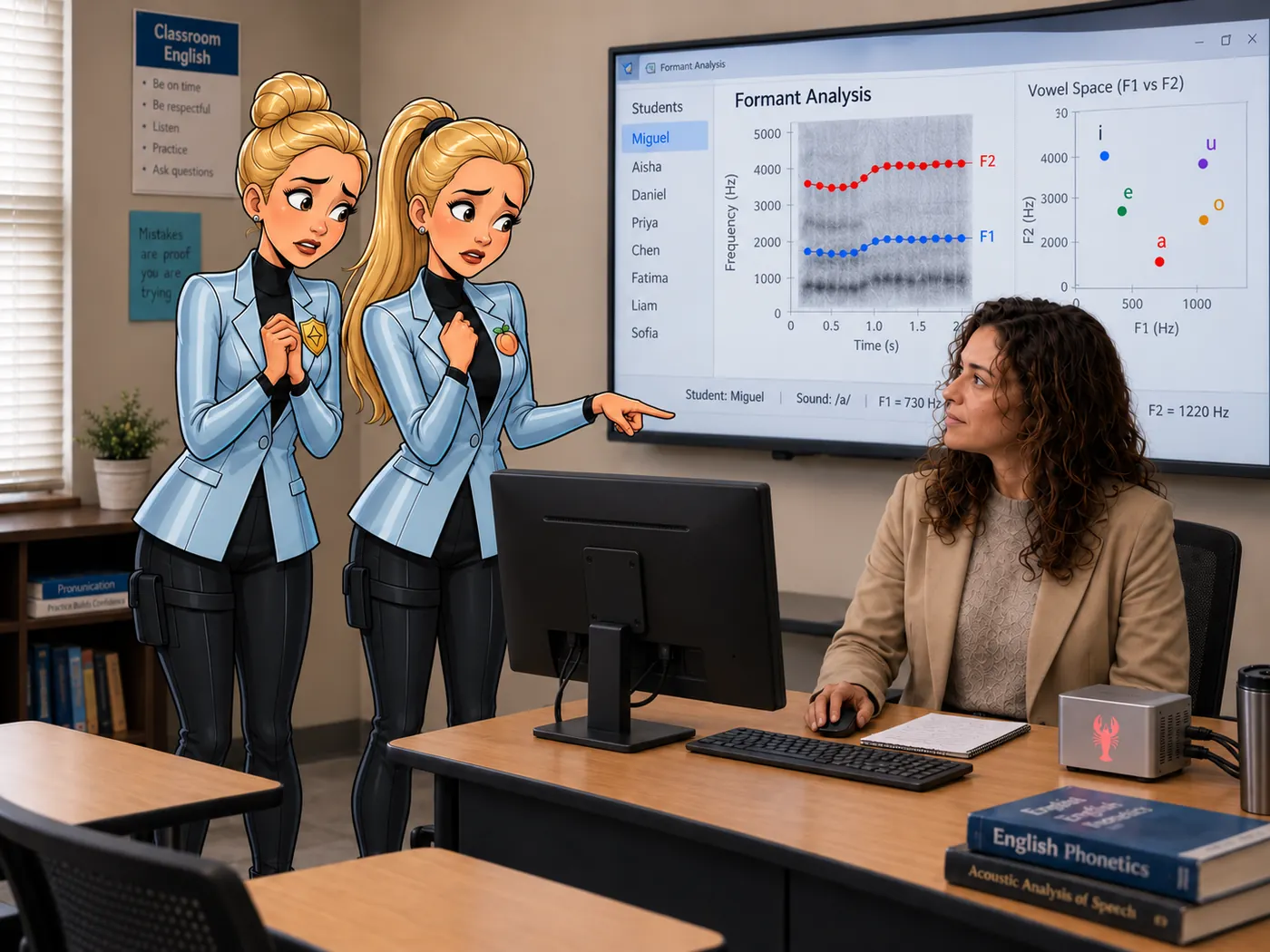
"Could we... maybe... can we ask... Mmm... Miguel to teach OpenClaw to process our data too? Mommy said she's willing to... to pay him," the twins even stammered in unison.
Ella smiled. "You can try. But you'd better hurry up —today's his last day here. He starts his new job tomorrow."
The Happily Ever After
Cindy is now the head of the International Phonetic Institute . Her father, Linus, finally found his spine, divorced Dean Googlynn's proprietary grasp on the budget, and now works for the Open Labs Foundation , which funds OpenClaw labs for underprivileged schools worldwide.
Miguel? He drives a different kind of carriage now—a pickup truck for his construction-site visits. And he still swings by on Tuesdays to write a new Python scripts for "the girls."

Even Dean Googlynn asked him to call her Gwynn. Cindy coughed loudly to hide the chuckle, but quickly composed herself and chimed in, "We are all family here. Right, Miguel?"
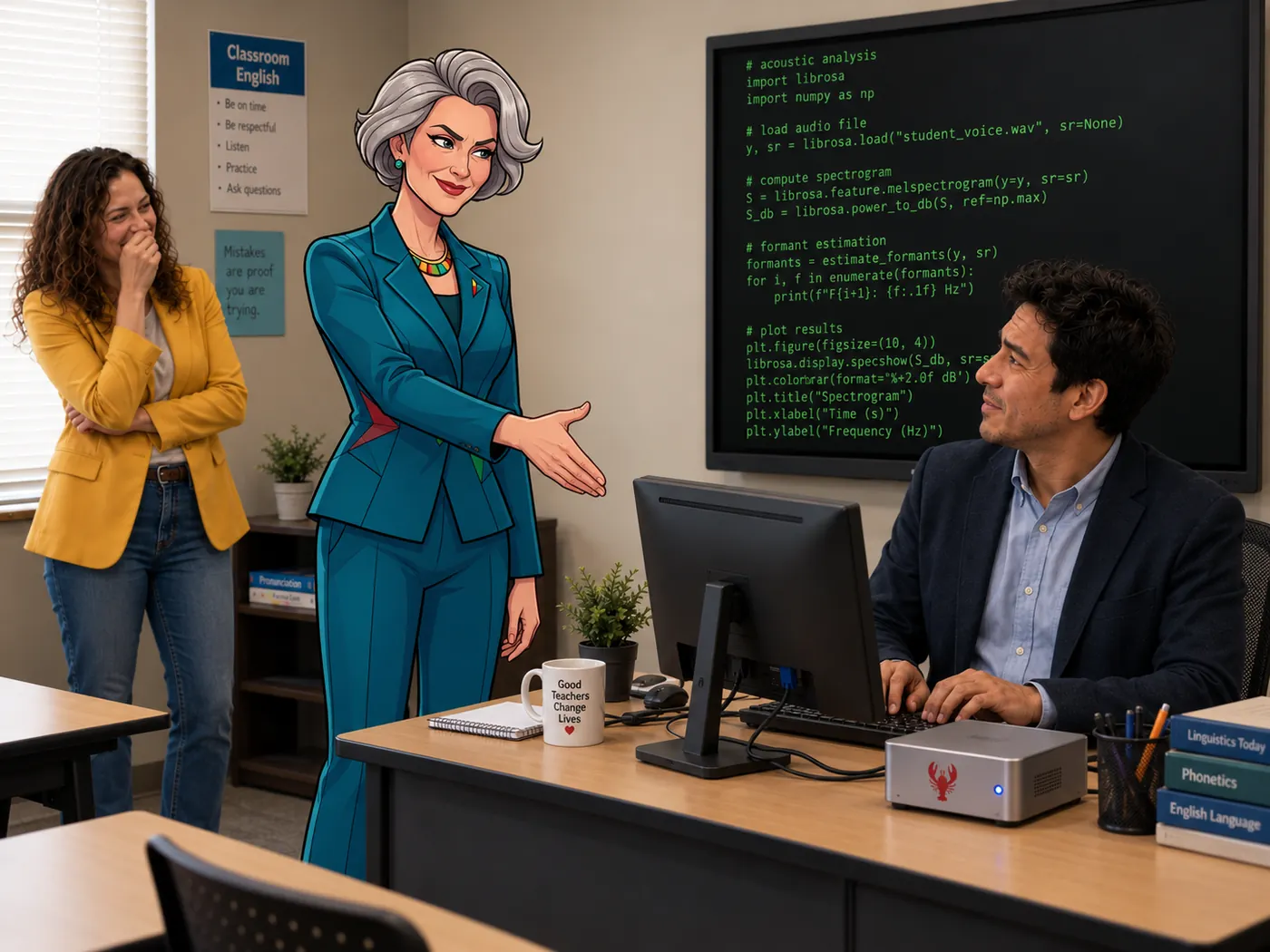
Later, after the trio was gone, Cindy and Miguel enjoy the quiet evening and remember the day when it all started.
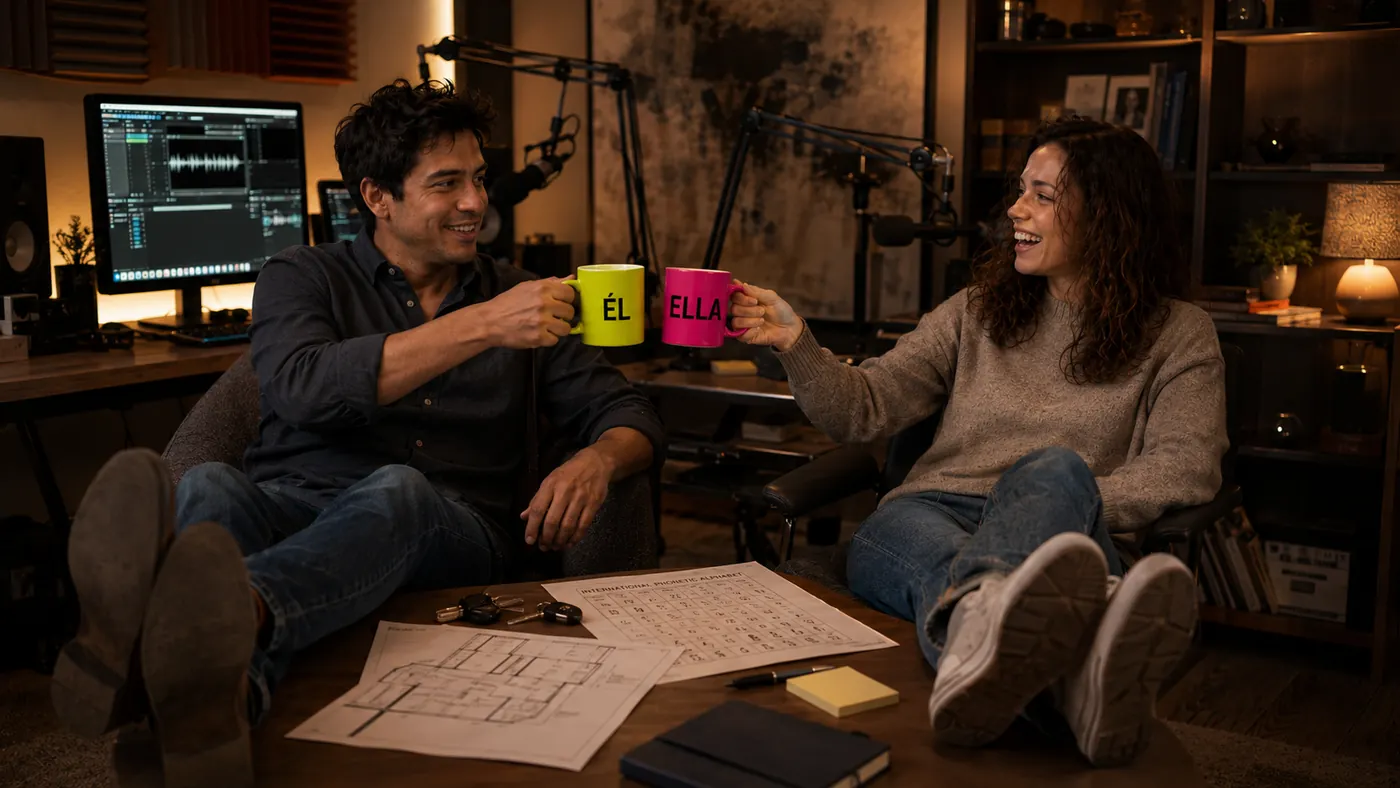
"To Uncle Praat!" she says.
"To Señor Praat!" he echoes, and they clink their mugs.
"Remember Él and Ella?"
"And a claw in the pie?"
"Lovesster!"
and they both burst out laughing.